Japanese Stiltgrass (Microstegium vimineum)
 One of the most aggressive invasive plant species in our region is Japanese Stiltgrass, also known as Nepalese Browntop. This annual grass, a native of Asia, was apparently introduced into Tennessee in the early 1900's, possibly as discarded packing material used for shipping porcelain. Since then, it has become established in many eastern states and as far west as Texas. Japanese Stiltgrass grows in a variety of habitats and thrives under moderate shade where it outcompetes many native species. It produces many seeds which remain viable in the soil for at least 3 years.
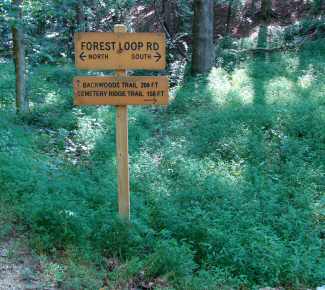 Stiltgrass quickly colonizes areas where the natural forest floor's leaf litter has been disturbed, such as along trail edges. Deer and livestock do not eat this grass, and it has been suggested that these animals preferentially select native species thus promoting the invasion of stiltgrass. Control of this species is challenging. Mechanical removal in late summer before seeds are produced can be effective. The UT Arboretum has been the site for two graduate student research projects investigating factors that affect the occurrence, rate of spread, and ecological impacts of stiltgrass in forested areas.
Return to Wildflowers List
|
