Boxwoods (Buxus spp.)
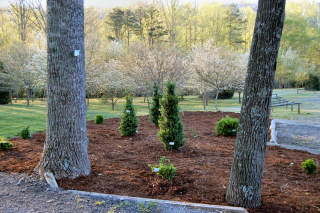 Although Boxwoods are native to parts of Europe, northern Africa, the Mediterranean region, and Asia, they have been used in North America for landscaping since colonial times. There are an estimated 70 to 80 species of boxwood, two of which - Buxus sempervirens (Common Boxwood) and B. microphylla (Littleleaf Boxwood) - have been used extensively to develop many hybrids and cultivars. Boxwoods are evergreen shrubs with opposite leaves that produce small yellow-green male and female flowers in the late spring or early summer. Although the flowers are not conspicuous, they are quite fragrant and attractive to bees. Because Boxwoods respond well to pruning, they are used for hedges, foundation plantings, topiary gardens, bonsai, and many other landscaping purposes. Most boxwood plants used for landscaping are small to large shrubs, but species such as Common Boxwood can grow to heights of 20 ft or more if not subjected to pruning. The wood from such plants is very hard and heavy and has historically been used for cabinet making (hence the name boxwood), engraving blocks for printing, handles for tools and daggers, and parts of musical instruments. A planting of 20 different boxwood hybrids and cultivars adjacent to the Arboretum's Program Shelter is being evaluated by UT researchers.
Return to Shrubs and Vines List
|
