Downy Rattlesnake Plantain (Goodyera pubescens)
 Downy Rattlesnake Plantain, one of our more common orchids, can be found throughout the year. Its basal rosette of dark, blue-green, rounded leaves have a distinctive network of silver veins with a broad stripe down the center of each leaf. These leaves are present throughout the winter and have been reported to persist up to four years. The entire plant is covered with a downy pubescence. The upright inflorescence of small white flowers appears in late July or early August.
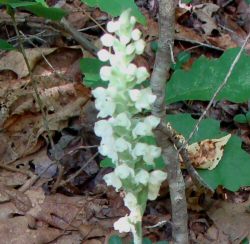 This species of Goodyera is found throughout the eastern US and adjacent Canada. In our area it is most commonly seen in dry upland pine and oak woodlands with acid soils. The mottled leaves, which somewhat resemble plantain, a common weed, are also said to resemble a snake's skin. Some have claimed that the plant can be used as a cure for snakebite. The dried inflorescence, which may persist into the following growing season, also resembles the rattles of a rattlesnake. Take your pick for the basis of the 'rattlesnake' portion of the common name!
Return to Wildflowers List
|
