Oriental Bittersweet (Celastrus orbiculatus)
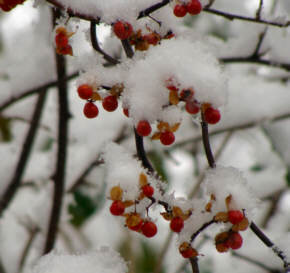 A walk along Cemetery Ridge Trail during our first snowstorm of the year (December 5, 2009) highlighted the bright red fruits of the Oriental Bittersweet vines that climb and, in some cases, cover some of the trees and shrubs along the trail. The fruits are initially green, but become bright yellow at maturity. When the yellow capsule breaks open in the fall, it reveals a fleshy red aril which contains two brown seeds.
The small greenish flowers develop in the spring (at the end of April this year). Each flower is typically unisexual either male or female, but some perfect flowers occasionally develop. The leaves are rounded to acute/elliptic, the latter shape being more common at the end of young developing shoots.
 This invasive woody vine was introduced to the US in the mid- to late 1800s and is especially troublesome in New England, the Atlantic coastal states, and the southern Appalachians. The vine aggressively twines around tree and shrub stems and can strangle (by girdling) or completely covers and shades out its hosts. The fruits are eaten and spread by birds. People also inadvertently help spread the attractive fruits which they gather for holiday decorations. Such decorations should be destroyed completely after the holidays to limit the spread of this invasive plant. At the Arboretum, Oriental Bittersweet is most common in relatively open areas along forest edges and is one of several invasive plants the Arboretum staff is attempting to eradicate.
Return to Shrubs and Vines List
|
